AI SEO vs AEO vs GEO: What's Different, and Why You Should Unify all 3
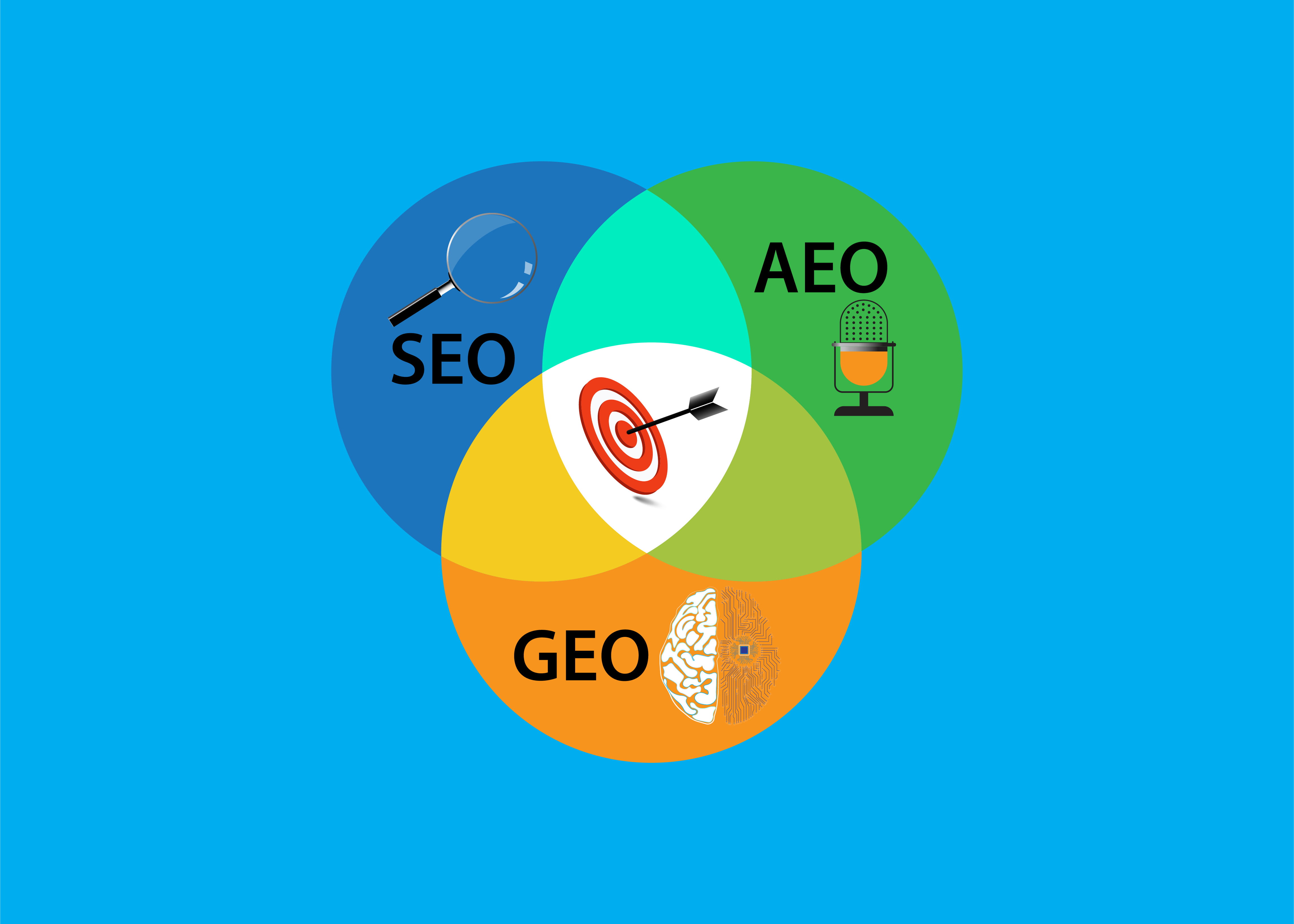
A lot of conversations we've seen on forums are still asking about the differences between AI SEO, GEO, and AEO. With Google's generative engine optimization, we felt it was a good time to revisit this subject.
<h1><strong>AI SEO vs AEO vs GEO: What is Different, and The One Strategy that Covers all Three</strong></h1><p><br></p><p>The AI SEO vs AEO vs GEO debate is everywhere right now. Three acronyms, each with someone insisting it's a separate discipline that needs its own budget and its own playbook. That framing sells services. It doesn't match how the work actually gets done. AI SEO, AEO and GEO point at different surfaces of the same shift: how people find and trust brands when they search through AI. Most businesses should run one unified strategy that covers all three, because almost nobody has the budget, or the reason, to run three at once.<br></p><p>These acronyms confused us at first too.</p><p></p><p>What made it click: AI SEO is the discipline itself, and AEO and GEO are strategies inside it. One is about becoming the answer, the other is about being the citation in the AI answer, and both serve the same purpose.<br></p><p><strong>Key takeaways</strong></p><ul><li><p>AI SEO is the discipline. AEO and GEO are strategies inside it, aimed at different surfaces.</p></li><li><p>AEO is about earning the direct answer. GEO is about getting cited inside generative tools.</p></li><li><p>Google's 2026 guidance says optimizing for generative AI is still SEO. The same authority and quality signals feed all three.</p></li><li><p>Most businesses get more from one unified strategy than from three competing ones. Efficiency is the whole advantage.</p></li><li><p>Where the differences bite is distribution. B2B audiences lean one way, B2C another, and the data shows you which.</p></li></ul><p><br><br></p><h2><strong>What Each Term Actually Means</strong></h2><img src="https://access.discoveraio.com/storage/v1/object/public/public-assets/email-images/AdobeStock_1662676406.jpeg" alt="" class="editor-image max-w-full h-auto rounded-lg cursor-pointer transition-all hover:opacity-80" draggable="false" style="max-width: 100%; height: auto;"><p></p><p>The fastest way past the confusion is a clear definition of each one, in plain language<br></p><h3><strong>AI SEO</strong></h3><p>AI SEO is the broad practice of optimizing your content so it performs across AI-augmented search. That covers Google's AI Overviews, the AI features inside traditional search and the standalone assistants people now use to research. Think of it as the umbrella the other two sit under.</p><h3><strong>AEO (answer engine optimization)</strong></h3><p>AEO focuses on earning the direct answer. That is the featured snippet, the AI Overview citation, the zero-click response that resolves a question before the user clicks anything. The goal is to be the answer the engine reads back, which means structuring content so a clean, quotable response is easy to lift.</p><h3><strong>GEO (generative engine optimization)</strong></h3><p>GEO focuses on getting cited inside generative tools like ChatGPT, Perplexity and Gemini when they synthesize an answer from many sources at once. It rewards content that is specific, well-sourced and easy for a model to attribute. The win is being named as a source the user can see. For the full playbook on earning those citations, see our <a target="_blank" rel="noopener noreferrer nofollow" class="text-primary underline" href="https://discoveraio.com/articles/what-is-generative-engine-optimization-geo"><u>guide to generative engine optimization</u></a>.</p><p></p><h2><strong>Why the AI SEO vs AEO vs GEO lines blur</strong></h2><img src="https://access.discoveraio.com/storage/v1/object/public/public-assets/email-images/Gemini_Generated_Image_6nmwjb6nmwjb6nmw__1_.png" alt="" class="editor-image max-w-full h-auto rounded-lg cursor-pointer transition-all hover:opacity-80" draggable="false" style="max-width: 100%; height: auto;"><p></p><p>The three blur together because they draw on the same signals. In its 2026 <a target="_blank" rel="noopener noreferrer nofollow" class="text-primary underline" href="https://developers.google.com/search/docs/fundamentals/ai-optimization-guide"><u>guide to optimizing for generative AI search</u></a>, Google put it directly: from Search's perspective, optimizing for generative AI "is optimizing for the search experience, and thus still SEO." The content that earns an AI Overview citation is usually the same content that gets pulled into a Perplexity answer: clear structure, direct answers, real authority and sources an engine can trust.<br></p><p>Picture a single page that defines a term cleanly, answers the obvious follow-up questions and cites its data. That one page can earn a featured snippet, get quoted by ChatGPT and lift your standing in Google's AI results without you doing three separate things to it. The quality is what travels. The acronym just describes which door it walked through.</p><p></p><h2><strong>Why Most Businesses Should Run One Unified Strategy</strong></h2><p></p><p>The practical decision is a budget question. Most companies cannot chase search engines, generative engines and AI-powered answers as three separate programs. Splitting your effort three ways usually means doing all three badly.</p><p>A unified strategy serves every surface from one foundation: deep content, clear structure, real authority and active distribution. You build the asset once, then make sure it is discoverable everywhere your audience looks. That is more efficient, and efficiency is the entire point when you are a small team competing against bigger ones.</p><p>Unified still means tailored. The foundation is shared across every business, and where you aim the effort depends on your audience and what the data shows.</p><p></p><h2><strong>Where the Differences Actually Change What You Do</strong></h2><p></p><p>The distinctions stop being academic when you look at distribution. When we check which sources an AI engine cites for a given prompt, the pattern shifts by audience.</p><p>For a B2B business, LinkedIn is often one of the top cited sources, and YouTube usually shows up in the mix. For a B2C brand, Reddit tends to outrank LinkedIn, with YouTube still present. Same underlying strategy, different places to show up.</p><p>We see it every week in community listening. The same questions show up across Reddit and LinkedIn: is SEO dead, what is your strategy to show up in AI Overviews, are blogs still useful. Those questions are the new keywords.</p><p>That is why the data leads. If you are not appearing in a generative engine your customers actually use, that is where the work shifts next. You watch the cited sources, you find the gaps and you go publish and participate where the answers are being built. The label you put on it matters far less than knowing which surface is sending you customers.<br></p><h2><strong>How to Build a Unified AI SEO Strategy</strong></h2><p></p><p>The approach we use and teach breaks into five steps.</p><p></p><h3><strong>Decide What You Want to Be Known For</strong><br></h3><p>Clarity comes first. Pick the questions and topics you want to own, the ones tied to how people actually buy from you. You cannot show up for everything, so choose the territory worth defending. You'll find that AI rewards niche content as well as uniqueness. So if you have something that you're passionate about, even if it's off the beaten path a bit, that's totally fine. Talk about it at length. Make those blogs, podcasts, long/short-form videos. </p><p></p><h3><strong>Build Deep Content on Those Topics</strong><br></h3><p>Create content with real depth, clear structure and <a target="_blank" rel="noopener noreferrer nofollow" class="text-primary underline" href="https://discoveraio.com/articles/5-ways-to-design-content-for-ai-discovery-paths"><u>answer-first sections an engine can quote</u></a>. Specificity is what gets pulled. The <a target="_blank" rel="noopener noreferrer nofollow" class="text-primary underline" href="https://collaborate.princeton.edu/en/publications/geo-generative-engine-optimization/">foundational GEO study from Princeton and Georgia Tech</a> found that adding concrete statistics to a page raised its citation rate in generative engines by up to 37%, and Google's 2026 guidance points the same way: write genuinely useful, specific content for people. Cover the related questions a reader would ask next, since that is the same surface area a generative engine pulls from when it runs a query fan-out, the set of related searches the model fires in parallel.</p><h3><br><strong>Track Where You Show Up</strong></h3><p>Check regularly whether you are <a target="_blank" rel="noopener noreferrer nofollow" class="text-primary underline" href="https://discoveraio.com/articles/aio-trackers-what-they-are-and-how-companies-are-using-them-to-win-in-ai-search"><u>cited across the engines that matter for your audience</u></a>, and note which sources get cited instead of you. That data tells you where to push next.</p><h3><br><strong>Distribute Where the Data Points</strong></h3><p>Publish and participate where the engines are sourcing answers for your audience. For one business that is LinkedIn, for another it is Reddit, and the cited-source data tells you which. Utilize community listening, and find out what people are saying about the field you're based in, and create content the answers the pain points your community is having. </p><h3><br><strong>Refresh What Works</strong></h3><p>Go back and update your strongest pieces. Content that sits still goes stale, and the fresher, better-maintained answer tends to win the citation. Xponent21 has what's known as the <a target="_blank" rel="noopener noreferrer nofollow" class="text-primary underline" href="https://xponent21.com/insights/the-good-farmer-seo-method/">Good Farmer SEO</a> concept, which covers the same thing. </p><p><br><br></p><h2><strong>Frequently Asked Questions</strong></h2><img src="https://access.discoveraio.com/storage/v1/object/public/public-assets/email-images/AdobeStock_293471314.jpeg" alt="" class="editor-image max-w-full h-auto rounded-lg cursor-pointer transition-all hover:opacity-80" draggable="false" style="max-width: 100%; height: auto;"><p><br><br></p><h3><strong>Is AEO the same as GEO?</strong></h3><p>They overlap heavily but aim at different surfaces. AEO is about earning the direct answer in search, like a featured snippet or an AI Overview citation. GEO is about getting cited inside generative tools like ChatGPT and Perplexity. The same well-structured content often serves both.</p><p><br></p><h3><strong>Do I need a separate GEO strategy?</strong></h3><p>For most businesses, no. GEO works best as part of a unified strategy rather than a standalone program. The signals that earn generative citations are the same ones that drive the rest of your AI search visibility.</p><p><br><br></p><h3><strong>Is AI SEO just SEO with a new name?</strong></h3><p>It <a target="_blank" rel="noopener noreferrer nofollow" class="text-primary underline" href="https://discoveraio.com/articles/ai-seo-vs-traditional-seo-key-differences-benefits-strategy"><u>builds directly on SEO</u></a>. The fundamentals that always mattered, authority, quality and structure, still decide whether you show up. AI SEO extends those fundamentals to new surfaces like AI Overviews and chat assistants.</p><p></p><h3><strong>Which one matters most for my business?</strong></h3><p>Start with where your customers already search and where the engines already cite sources for your topics. The data points to the surface worth prioritizing, which is more useful than ranking the acronyms in the abstract.</p><h2><strong>Where to Go From Here</strong></h2><ul><li><p>Want the full picture on getting cited by generative engines? Start with our <a target="_blank" rel="noopener noreferrer nofollow" class="text-primary underline" href="https://discoveraio.com/articles/what-is-generative-engine-optimization-geo"><u>guide to generative engine optimization</u></a>.</p></li><li><p>Want the definitions in one place? The <a target="_blank" rel="noopener noreferrer nofollow" class="text-primary underline" href="https://discoveraio.com/articles/the-ai-seo-glossary-terms-for-geo-aeo-and-the-new-search-landscape"><u>AI SEO glossary of GEO, AEO and the new search landscape</u></a> is the reference.</p></li><li><p>Ready to go deeper on the unified strategy? It is the backbone of the <a target="_blank" rel="noopener noreferrer nofollow" class="text-primary underline" href="https://discoveraio.com/courses/ai-seo-leadership-blueprint-command-rankings-drive-success"><u>AI SEO Leadership Blueprint course</u></a> on DiscoverAIO.</p></li></ul><p><br><br></p><h2><strong>Build The One Strategy That Covers all Three</strong></h2><p>The AI SEO vs AEO vs GEO debate is mostly noise. The terms are useful for knowing which surface you are looking at, and the work that wins all three is the same: deep, structured, genuinely authoritative content, distributed where your audience and the engines actually meet.</p><p>People chase the acronyms because they want something to put in a box. It is compartmentalizing, and underneath it is the anxiety of becoming obscure in the new chapter of the Industrial Revolution. If you are frozen by all of it, the move is simple: just try. You might be sitting on a gold mine of content, but you will not know until you publish.</p><p>That is what we build with members every day. DiscoverAIO gives you the community, the tools and the courses to run one strategy that shows up everywhere it needs to. <a target="_blank" rel="noopener noreferrer nofollow" class="text-primary underline" href="https://discoveraio.com/membership"><u>Join DiscoverAIO and start building your AI search visibility.</u></a></p><p><br></p>