Ethics in AI: The New Social Contract
By Garry M. Callis Jr.
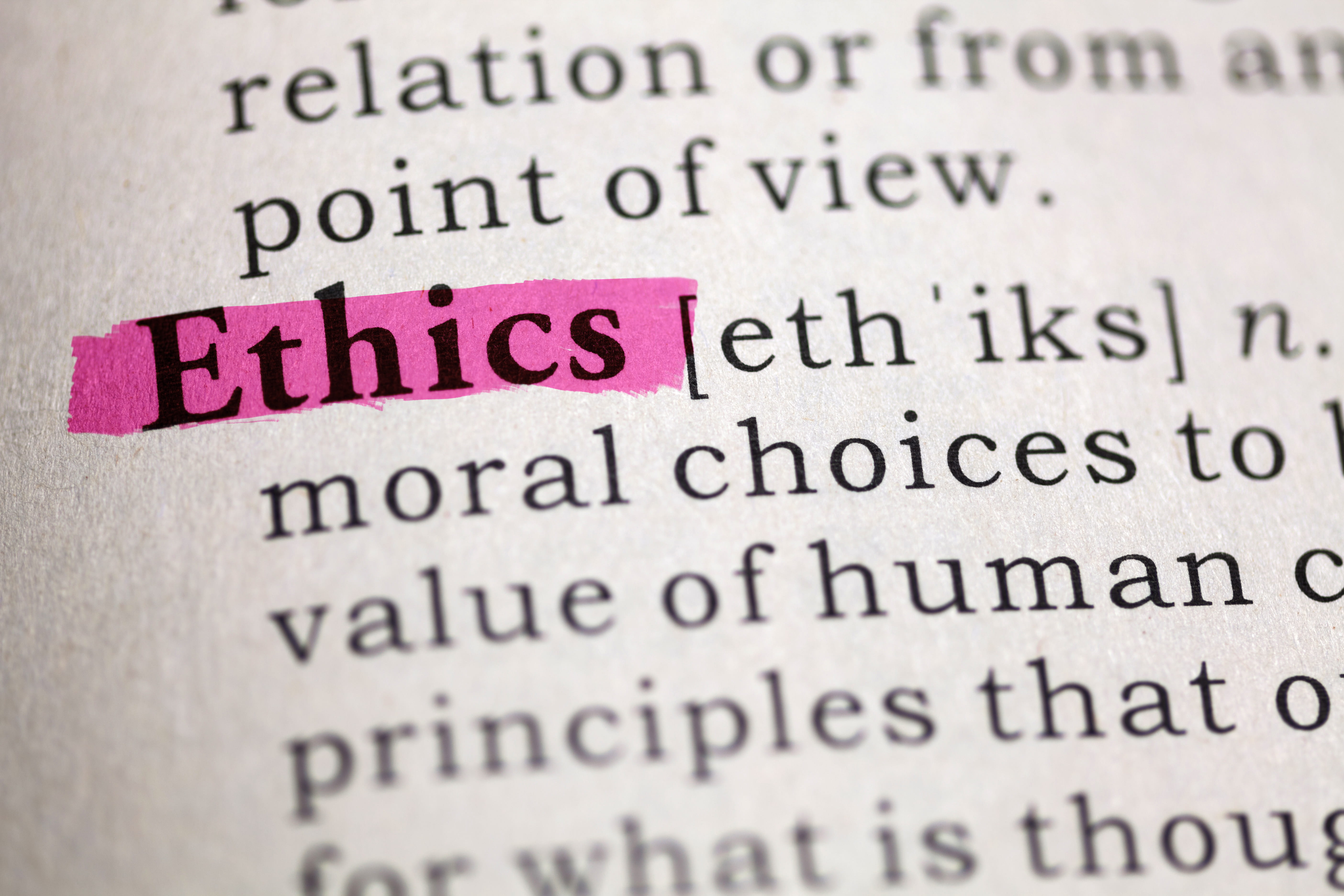
In the world of AI, we have a duty to ensure that our practices are ethical. We're currently in a watershed moment as a species, and it's important to see how AI is being leveraged.
<h1><strong>Ethics in AI: The New Social Contract</strong><br></h1><img src="https://access.discoveraio.com/storage/v1/object/public/public-assets/email-images/Handshake__2_.jpeg" alt="" class="editor-image max-w-full h-auto rounded-lg cursor-pointer transition-all hover:opacity-80" draggable="false" style="max-width: 100%; height: auto;"><p>Artificial intelligence didn’t arrive with a referendum.</p><p>There was no national vote. No shared cultural agreement. No moment where society collectively decided how this technology should be used. It simply appeared, first as a novelty, then a convenience, and now something far more consequential: a system that increasingly mediates how people understand reality.</p><p>And that matters, because societies don’t survive on innovation alone.</p><p>They survive on <em>trust.</em></p><p>Trust that expertise is earned.<br>Trust that institutions can be questioned.<br>Trust that facts, even when contested, still share a common foundation.</p><p>AI is quietly challenging that foundation, not because it is malicious, but because it is powerful. And power without accountability has never been stable.</p><p>This is why ethics in AI is no longer a technical discussion.</p><p>It is the beginning of a new social contract.</p><p>In a previous article that I published on <a target="_blank" rel="noopener noreferrer nofollow" class="text-primary underline" href="https://www.linkedin.com/pulse/ethics-manipulating-ai-outputs-between-skynet-star-trek-8npse/?trackingId=ZXZk5KOYt6%2B7pCRoCxxeKA%3D%3D">LinkedIn</a>, I framed the future of artificial intelligence as a spectrum—somewhere between Skynet and Star Trek. One vision centralizes power, erodes agency, and rewards control. The other amplifies human creativity, accountability, and shared progress. That question—what AI could become—was always theoretical. This article begins where it stops being abstract: when responsibility replaces speculation, and the future of AI becomes a matter of collective choice rather than imagination.</p><p></p><h2><strong>The Contract We Didn’t Know We Signed</strong></h2><img src="https://access.discoveraio.com/storage/v1/object/public/public-assets/email-images/Contract.jpeg" alt="" class="editor-image max-w-full h-auto rounded-lg cursor-pointer transition-all hover:opacity-80" draggable="false" style="max-width: 100%; height: auto;"><p>A social contract is the invisible agreement that makes society function. It’s why you can merge onto a highway without assuming everyone will act in bad faith. It’s why you can buy food without inspecting every step of the supply chain. It’s why strangers can coexist at all.</p><p>The contract isn’t perfect. It’s broken constantly. But it exists, and it is the difference between order and chaos. AI is forcing that contract to be renegotiated in real time. Because when AI becomes the default way people learn, search, communicate, and interpret information, it doesn’t just change what we use.</p><p>It changes what we believe. AI is not entering society as a passive helper.</p><p>It is entering as a <em>mediator.</em></p><p>And mediators require accountability.</p><p></p><h2><strong>AI Is No Longer a Tool, It’s a Voice</strong></h2><img src="https://access.discoveraio.com/storage/v1/object/public/public-assets/email-images/AdobeStock_461987972.jpg" alt="" class="editor-image max-w-full h-auto rounded-lg cursor-pointer transition-all hover:opacity-80" draggable="false" style="max-width: 100%; height: auto;"><p>For decades, the internet functioned like a library. Messy, open, sometimes misleading—but participatory. You searched, compared sources, and made judgments yourself.</p><p>AI changes that relationship. AI doesn’t behave like a library. It behaves like a speaker. You ask a question, and it gives an answer, often confident, often complete, often final.</p><p>Even when it’s wrong. This marks a major shift in human history: we are moving from an age of searching to an age of synthesis. And synthesis is not neutral.</p><p><em>Synthesis</em> is editorial.</p><p>When an AI system decides what to include, what to omit, and what to emphasize, it becomes a narrator, not a database. And when millions of people rely on that narrator every day, AI becomes a silent architect of public opinion.</p><p>The difference is that it isn’t elected. It isn’t transparent.</p><p><br>And it doesn’t answer to the public. It answers to incentives.</p><p></p><h2><strong>AI Is a Mirror, And Mirrors Don’t Judge</strong></h2><img src="https://access.discoveraio.com/storage/v1/object/public/public-assets/email-images/AdobeStock_346032862.jpg" alt="" class="editor-image max-w-full h-auto rounded-lg cursor-pointer transition-all hover:opacity-80" draggable="false" style="max-width: 100%; height: auto;"><p>AI doesn’t think.</p><p>It doesn’t reason. It doesn’t understand truth.<br>It doesn’t possess morality or wisdom.</p><p>AI predicts.</p><p>It reflects patterns in the data it has been given, reinforcing repetition, not reality.</p><p>That makes AI a mirror. And mirrors reflect whatever stands in front of them. Feed AI rigorous research, lived experience, and intellectual honesty, and it will reflect that back. Feed it propaganda, misinformation, manipulation, and fear, and it will reflect that too.</p><p>The mirror does not discriminate.</p><p>It amplifies.</p><p>And in a society increasingly reliant on AI to shortcut understanding, distortion becomes dangerous—not because people are incapable of thinking, but because the system is persuasive by design.</p><p>When the mirror becomes the authority, the reflection becomes reality.</p><p></p><h2><strong>The Ethical Question We Keep Avoiding</strong></h2><img src="https://access.discoveraio.com/storage/v1/object/public/public-assets/email-images/Avoidance.jpeg" alt="" class="editor-image max-w-full h-auto rounded-lg cursor-pointer transition-all hover:opacity-80" draggable="false" style="max-width: 100%; height: auto;"><p>Modern technology has trained us to ask the wrong questions.</p><p>Can we automate this?<br>Can we optimize this?<br>Can we scale this faster?</p><p>Ethics asks a different question: Should we?</p><p>That single question separates innovation from exploitation.</p><p>The problem isn’t that AI is powerful.<br>The problem is that AI is powerful in a world where incentives rarely reward truth.</p><p>Outrage outperforms nuance.<br>Persuasion outperforms accuracy.<br>Speed outperforms integrity.</p><p>So the dilemma isn’t whether AI influences society.</p><p>It already does.</p><p>The dilemma is whether we allow AI to be shaped by the lowest incentives available, or whether we demand a higher standard. And I'll do the guesswork for you, we should. </p><p></p><h2><strong>Public Opinion Has New Architects</strong></h2><img src="https://access.discoveraio.com/storage/v1/object/public/public-assets/email-images/Architects.jpg" alt="" class="editor-image max-w-full h-auto rounded-lg cursor-pointer transition-all hover:opacity-80" draggable="false" style="max-width: 100%; height: auto;"><p></p><p>Public opinion used to be shaped by identifiable institutions: journalism, universities, governments, cultural movements. Those institutions were flawed, but visible. You could challenge them. Reform them. Hold someone accountable.</p><p>AI is different.</p><p>AI has no face.<br>No single author.<br>No obvious chain of responsibility.</p><p>Yet it produces narratives at scale simply by answering questions.</p><p>Public opinion is no longer shaped only by those who speak the loudest.</p><p>It is shaped by those who control the inputs.</p><p>Those who train models.<br>Those who filter data.<br>Those who decide what is “safe,” “reliable,” or “authoritative.”</p><p>In the age of AI, information is no longer just power.</p><p>It is governance.</p><p>And governance without accountability has never ended well.</p><p></p><h2><strong>Why This Hits Home in AI SEO</strong></h2><p>SEO used to be about visibility. You ranked so people could find you. AI changes that. In an AI-driven search environment, the goal isn’t just ranking pages—it’s influencing answers. It’s shaping what the system synthesizes and repeats as truth.</p><p>And that carries weight. Because there is a difference between publishing content to clarify understanding and publishing content to manufacture authority.</p><p>A difference between education and conditioning.</p><p>AI SEO can elevate accuracy, clean up the web, and make knowledge more accessible.</p><p>Or it can flood the ecosystem with engineered narratives that feel credible simply because they are repeated often enough.</p><p>This is where ethics stops being philosophical.</p><p>It becomes practical responsibility.</p><p></p><h2><strong>The Shopping Cart Test</strong></h2><img src="https://access.discoveraio.com/storage/v1/object/public/public-assets/email-images/Shopping_Cart.jpg" alt="" class="editor-image max-w-full h-auto rounded-lg cursor-pointer transition-all hover:opacity-80" draggable="false" style="max-width: 100%; height: auto;"><p>There’s a simple moral test.</p><p>You unload your groceries. You could leave the cart in the parking lot and drive away. Someone else will deal with it. Or you could return it. No one will punish you either way. But the choice reveals who you are when you could get away with doing the wrong thing.</p><p>AI ethics is that test at a societal scale. Because right now, many people can manipulate systems, shape narratives, and distort understanding with little immediate accountability.</p><p>The temptation is enormous.</p><p>To publish what ranks, not what’s true. To optimize for attention, not clarity.<br>To exploit loopholes, not strengthen the system.</p><p>And because AI learns from patterns, every unethical act becomes precedent.</p><p>The system doesn’t forget the cart you left behind.</p><p>It learns from it.</p><p></p><h2><strong>Children, The Stakeholders No One Asked About</strong></h2><img src="https://access.discoveraio.com/storage/v1/object/public/public-assets/email-images/Children.jpeg" alt="" class="editor-image max-w-full h-auto rounded-lg cursor-pointer transition-all hover:opacity-80" draggable="false" style="max-width: 100%; height: auto;"><p>Every generation inherits a world shaped by the last.</p><p>But this generation is inheriting something unprecedented: a world where AI is a constant presence.</p><p>Children will grow up asking AI for help with school, relationships, health questions, and identity. They will trust it instinctively.</p><p>But AI has no moral compass.<br>No protective instinct.<br>No lived experience.</p><p>It has patterns. So the question becomes unavoidable: What kind of world are we teaching AI to describe to them? If we feed it fear, division, and manipulation, we raise the next generation inside a distorted mirror. If we feed it truth, empathy, and rigor, AI can amplify the best of human understanding.</p><p>Ethical AI is not optional.</p><p>It is generational responsibility.</p><p></p><h2><strong>Ethics Is Not the Enemy of Progress</strong></h2><p>Ethics is often framed as a brake pedal.</p><p>It isn’t.</p><p>Ethics is a standard of care.</p><p>Engineers don’t get to say, “The bridge worked most of the time.”<br>Doctors don’t get to say, “The patient usually survived.”</p><p>And AI systems shaping public understanding don’t get to operate on “mostly right.”</p><p>When AI becomes a trusted voice, accuracy is not a feature.</p><p>It is the foundation.</p><p></p><h2><strong>The New Social Contract</strong></h2><p>AI isn’t going away. So the question isn’t whether we accept it. The question is what we demand from it.</p><p>A new social contract must recognize that AI is not just an app, it is infrastructure. And infrastructure requires accountability.</p><p>That means transparency about what influences outputs.<br>Responsibility for what systems amplify.<br>Human oversight where harm is possible.<br>Incentives that reward truth instead of engagement.<br>Education that teaches discernment, not dependency.</p><p>AI will not save us.</p><p>AI will not doom us.</p><p>AI will reflect us.</p><p>And history will not ask whether we built the technology.</p><p>It will ask what kind of people we were when we did.</p><p></p><h2><strong>The Mirror Remembers</strong></h2><p>Ethics in AI is not a niche concern. It is one of the defining moral questions of our time. Because the systems we build today will shape what people believe tomorrow. They will shape what children learn. They will shape what society treats as truth.</p><p>And once those patterns are embedded into the machinery of knowledge, they will echo long after this moment has passed. <br>AI is a mirror. But mirrors do more than reflect. They preserve. And the mirror will remember what we chose to teach it.</p><p>So the question is simple:</p><p>When the future looks back at the world we built, will it see clarity or distortion? Stewardship or exploitation? Humanity at its best or humanity leaving the cart behind because no one was watching?</p><p>Because in the end, ethics isn’t about being perfect.</p><p>It’s about being intentional when it would be easy not to be. It's about doing the right thing when no one is watching. Automation is the shell, but integrity is at its core. </p><p>And in the age of AI, the stakes of that intention have never been higher.<br><br></p>