How To Measure Your Visibility in AI Search
By Garry M. Callis Jr.
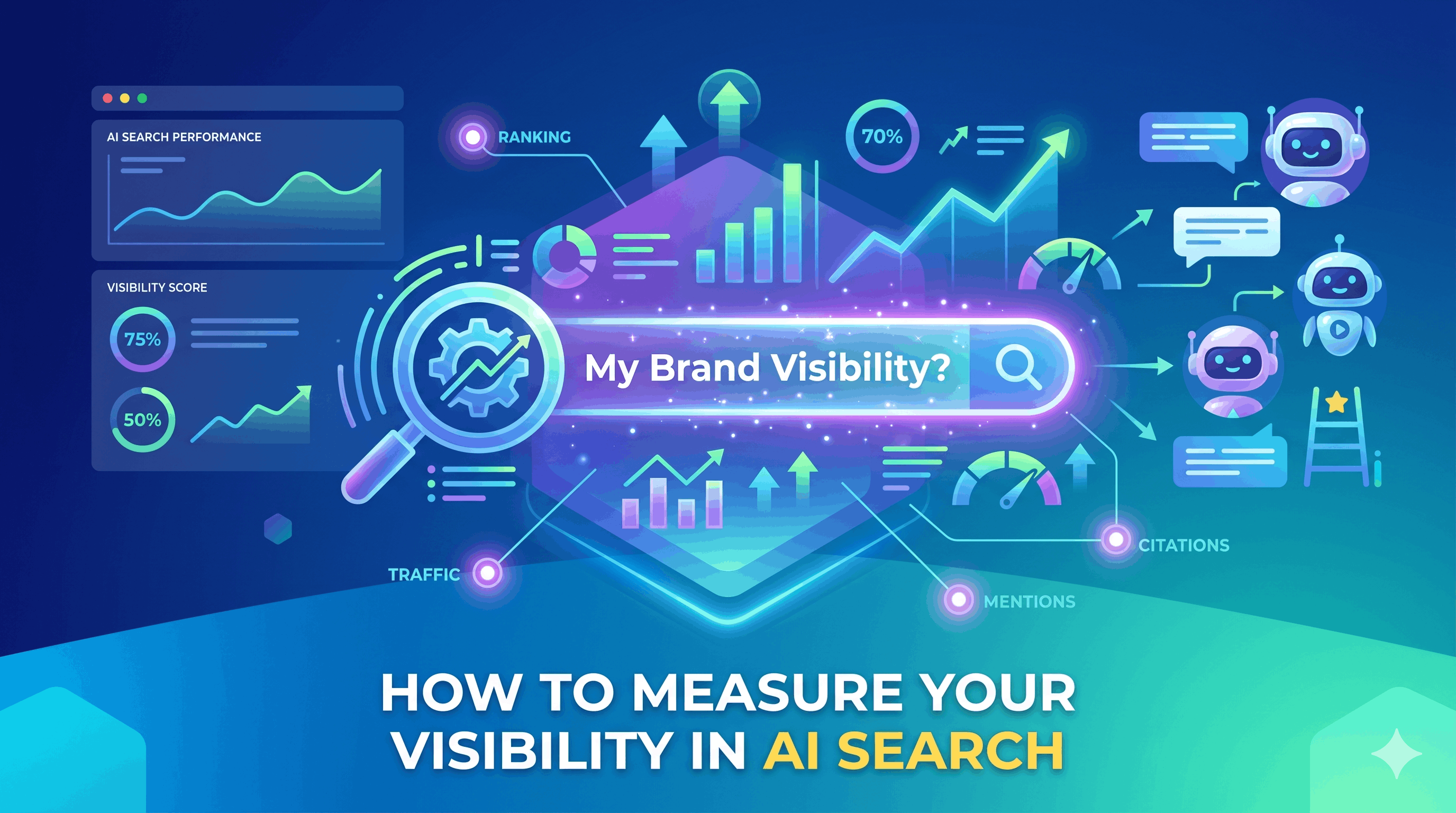
We've heard and seen the posts on social media about how prominent the "Zero-Click" era is. You need to understand as a consumer and as a marketer, now important it is to appear in AI search results. This article is a quick dive into AI visibility, and how you should look at AI search.
<p>You can feel your AI search visibility slipping and still have no number to point at. That is the problem with measuring visibility in AI search: the answer engines that now field a growing share of your buyers' questions do not hand you a rankings report. To measure your visibility in AI search, you track four things across the engines your audience actually uses: whether you are mentioned, whether you are cited as the source, how often you appear compared to competitors and how prominently you show up. Everything below turns those four into a process you can run this week, by hand or with tools.</p><p>Ranking well no longer guarantees any of it. A page can sit at position three in Google and never appear in the AI Overview above it, which is why measurement has to move from "where do I rank" to "where do I get named." We covered the why of that gap in our article, "<a target="_blank" rel="noopener noreferrer nofollow" class="text-primary underline" href="https://discoveraio.com/articles/why-your-brand-doesnt-appear-in-ai-overviews-ahrefs-explains">Why Your Brand Doesn't Appear in AI Overviews</a>". This piece is the how of catching it.</p><h2>Presence and Prominence are Two Different Things</h2><p>Visibility in AI search has two layers, and conflating them is the most common measurement mistake. Presence is whether your brand appears at all. Prominence is how you appear: first or fifth, as the cited source or as an unlinked aside, described accurately or described wrong.</p><p>Picture a project-management software company. ChatGPT mentions them in answers about "tools for managing a remote team," so their presence is real. But the same answers describe them as "a budgeting app," and a competitor gets the citation link. Their presence looks fine and their prominence is broken. A measurement system that only counts mentions would call that a win. It is not. You need both layers, which is why the metrics below separate them.</p><h2>The Four Metrics that Matter</h2><img src="https://access.discoveraio.com/storage/v1/object/public/public-assets/email-images/AdobeStock_581567432.jpeg" alt="" class="editor-image max-w-full h-auto rounded-lg cursor-pointer transition-all hover:opacity-80" draggable="false" style="max-width: 100%; height: auto;"><p>Track these four. Each answers a different question, and together they give you a complete picture instead of a vanity number.</p><h3>Presence: Are You Mentioned at All?</h3><p>Presence is the count of AI answers that name your brand across a fixed set of prompts. It is the floor metric. If presence is near zero relative to your category, no other optimization matters yet, because you are not in the conversation the model is having with your buyer. Track it as a simple ratio: mentions divided by the total prompts you test.</p><h3>Citation Rate: Are You the Source?</h3><p>Citation rate is the share of answers where the engine links to or names your content as the source, not just your brand in passing. This is the metric that maps to traffic and authority, because a citation is the path back to your site and the signal that the model trusts your page. A brand can have high presence and low citation rate, which means AI knows you exist but reaches for someone else's content to back up the claim.</p><h3>Share of Voice: How you Compare</h3><p>Share of voice is your presence measured against your competitors for the same prompt set. The formula is plain: the number of answers that mention you divided by the total answers tracked, expressed as a percentage, then compared to the same figure for each competitor. Share of voice is the number that means something to a leadership team, because it is relative. "We appear in 20% of answers and our top competitor appears in 55%" tells a story that a raw mention count never will.</p><h3>Prominence and Sentiment: How You Show Up</h3><p>Prominence captures position and framing: are you named first or buried, and is the description accurate. Sentiment captures whether the framing helps or hurts. Log both qualitatively for every answer where you appear. An outdated feature list or a comparison that frames a competitor more favorably is a prominence problem you can fix at the source, and you will only catch it if you are reading the answers, not just counting them.</p><h3>How to Run Your First Measurement, By Hand</h3><p></p><p>You do not need a paid tool to baseline this. You need a spreadsheet and an afternoon. Run this once and you will understand your AI visibility better than most teams that bought software and never read the output.</p><p>1. <strong>Build a prompt set of 15 to 25 questions your buyers actually ask.</strong> Use real buyer language: "best X for Y," "X versus competitor," "how do I solve Z." These are the questions that trigger AI answers, so they are the ones that matter.</p><p>2. <strong>Run every prompt across the engines your audience uses.</strong> At minimum, ChatGPT, Perplexity and Google AI Mode. Run each prompt fresh and capture the full answer.</p><p>3. <strong>Log four columns for each answer:</strong> mentioned (yes or no), cited as source (yes or no), competitors named, and a short note on how you were described.</p><p>4. <strong>Calculate your baseline.</strong> Presence rate, citation rate and share of voice fall straight out of the columns. The description notes become your prominence and sentiment read.</p><p>5. <strong>Repeat the exact same prompt set monthly.</strong> The single prompt set, run on a fixed cadence, is what turns a snapshot into a trend you can act on.</p><p>The <a target="_blank" rel="noopener noreferrer nofollow" class="text-primary underline" href="https://discoveraio.com/resources/72-point-ai-seo-readiness-audit">72-point AI SEO readiness audit</a> pairs well with this step, because a low presence score often traces back to a technical or structural issue the audit surfaces.</p><h2>The Tools That Automate It</h2><p></p><p>Once the manual baseline proves the work is worth doing, tools remove the grind of running prompts every month. Several platforms now track brand mentions and citations across AI engines on a schedule, store historical snapshots and compare you to competitors. <a target="_blank" rel="noopener noreferrer nofollow" class="text-primary underline" href="http://Otterly.ai">Otterly.ai</a>, SE Ranking, Semrush and Ahrefs all offer AI-visibility or AI-Overview tracking features, and newer specialist tools focus only on this. They differ in which engines they cover, how often they refresh and whether they capture prominence or only presence, so match the tool to the four metrics above rather than to a feature list.</p><p>A note on what tools cannot do: they count and they alert, but they do not read for framing. The prominence and sentiment layer still needs a human looking at how the answer describes you, which is the part that protects your brand from being quietly mis-sold by a model. Treat the tool as the instrument and yourself as the one reading the dial. For a deeper look at how the tracking category works, see "<a target="_blank" rel="noopener noreferrer nofollow" class="text-primary underline" href="https://discoveraio.com/articles/aio-trackers-what-they-are-and-how-companies-are-using-them-to-win-in-ai-search">AIO Trackers and How Companies Use Them"</a></p><h2>How to Turn Measurement Into a Reporting Cadence</h2><p>Measurement only changes outcomes when it runs on a rhythm and reaches the people who set priorities. Set a monthly cadence: same prompt set, same engines, same four metrics, logged against last month. Report share of voice as the headline number because it is the one a stakeholder can act on, and pair every drop with the specific answers that caused it so the report points at a fix, not just a trend.</p><p>Picture a B2B marketing lead who has been asked why pipeline softened while rankings held. She pulls her monthly AI visibility log, shows that her share of voice fell from 28% to 14% after a competitor published a comparison piece that AI now cites, and walks in with the source to update rather than a vague worry. That is the difference measurement makes: it turns "something feels off" into a named problem with an owner.</p><p></p><p><strong>Key Takeaways</strong></p><p>Visibility in AI search has two layers: presence (are you mentioned) and prominence (how you appear). Measure both, because a brand can have strong presence and broken prominence at the same time.</p><ul><li><p>The four metrics that matter are presence rate, citation rate, share of voice and prominence/sentiment.</p></li><li><p>You can baseline your AI visibility by hand with a fixed prompt set of 15 to 25 buyer questions run across ChatGPT, Perplexity and Google AI Mode, logged in a spreadsheet.</p></li><li><p>Share of voice is the number to report to leadership, because it is relative and tells a story a raw mention count cannot.</p></li><li><p>Tools automate the counting, but a human still has to read for framing and sentiment.</p></li><li><p> Measurement changes outcomes only when it runs on a monthly cadence and pairs every change with the specific answer that caused it.</p></li></ul><h2>Frequently Asked Questions</h2><img src="https://access.discoveraio.com/storage/v1/object/public/public-assets/email-images/AdobeStock_293471314.jpeg" alt="" class="editor-image max-w-full h-auto rounded-lg cursor-pointer transition-all hover:opacity-80" draggable="false" style="max-width: 100%; height: auto;"><h3>What Is The Difference between AI Search Visibility and Keyword Rankings?</h3><p>Keyword rankings measure where your page sits in the traditional list of blue links. AI search visibility measures whether AI answers mention and cite your brand when a buyer asks a question. They are separate achievements, because a page can rank well and never appear in the AI answer that sits above the results.</p><h3>What Tools Can Measure Visibility in AI Search?</h3><p>Platforms like <a target="_blank" rel="noopener noreferrer nofollow" class="text-primary underline" href="http://Otterly.ai">Otterly.ai</a>, SE Ranking, Semrush and Ahrefs offer AI-visibility or AI-Overview tracking, and several specialist tools focus only on AI search. They vary in engine coverage, refresh frequency and whether they capture prominence or only presence, so choose based on which of the four core metrics you most need to track.</p><h3>Can I Measure AI Search Visibility For Free?</h3><p>Yes. Build a fixed set of 15 to 25 buyer questions, run them across ChatGPT, Perplexity and Google AI Mode, and log whether you are mentioned, whether you are cited, which competitors appear and how you are described. Repeat the same set monthly and you have a real trend without paying for a tool.</p><h3>What is "Share of Voice" in AI Search?</h3><p>Share of voice is the percentage of AI answers that mention your brand across a fixed prompt set, compared to the same figure for your competitors. It is the most useful single metric to report to leadership because it is relative and shows your standing in the category rather than a raw count.</p><p></p><h2>Next Steps</h2><ol><li><p>Run the <a target="_blank" rel="noopener noreferrer nofollow" class="text-primary underline" href="https://discoveraio.com/resources/72-point-ai-seo-readiness-audit">72-point AI SEO readiness audit</a> to find the structural issues behind a low presence score.</p></li><li><p>Read <a target="_blank" rel="noopener noreferrer nofollow" class="text-primary underline" href="https://discoveraio.com/articles/why-your-brand-doesnt-appear-in-ai-overviews-ahrefs-explains">Why Your Brand Doesn't Appear in AI Overviews</a> for the diagnosis that pairs with this measurement guide.</p></li><li><p>Study the tracking category in <a target="_blank" rel="noopener noreferrer nofollow" class="text-primary underline" href="https://discoveraio.com/articles/aio-trackers-what-they-are-and-how-companies-are-using-them-to-win-in-ai-search">AIO Trackers and How Companies Use Them</a>.</p></li></ol><p></p><p>Measurement is the difference between guessing at your AI visibility and managing it. Once you can see where you are named, cited and compared, every other piece of AI search work has a scoreboard to move. DiscoverAIO is built for the practitioners doing that work, with the community, courses and resources to turn a baseline into a strategy. <a target="_blank" rel="noopener noreferrer nofollow" class="text-primary underline" href="https://discoveraio.com/membership">Join DiscoverAIO </a>and start measuring what actually moves your visibility. </p>