How to Track Pipeline and ROI from AI Search Citations in 2026
By Garry M. Callis Jr.
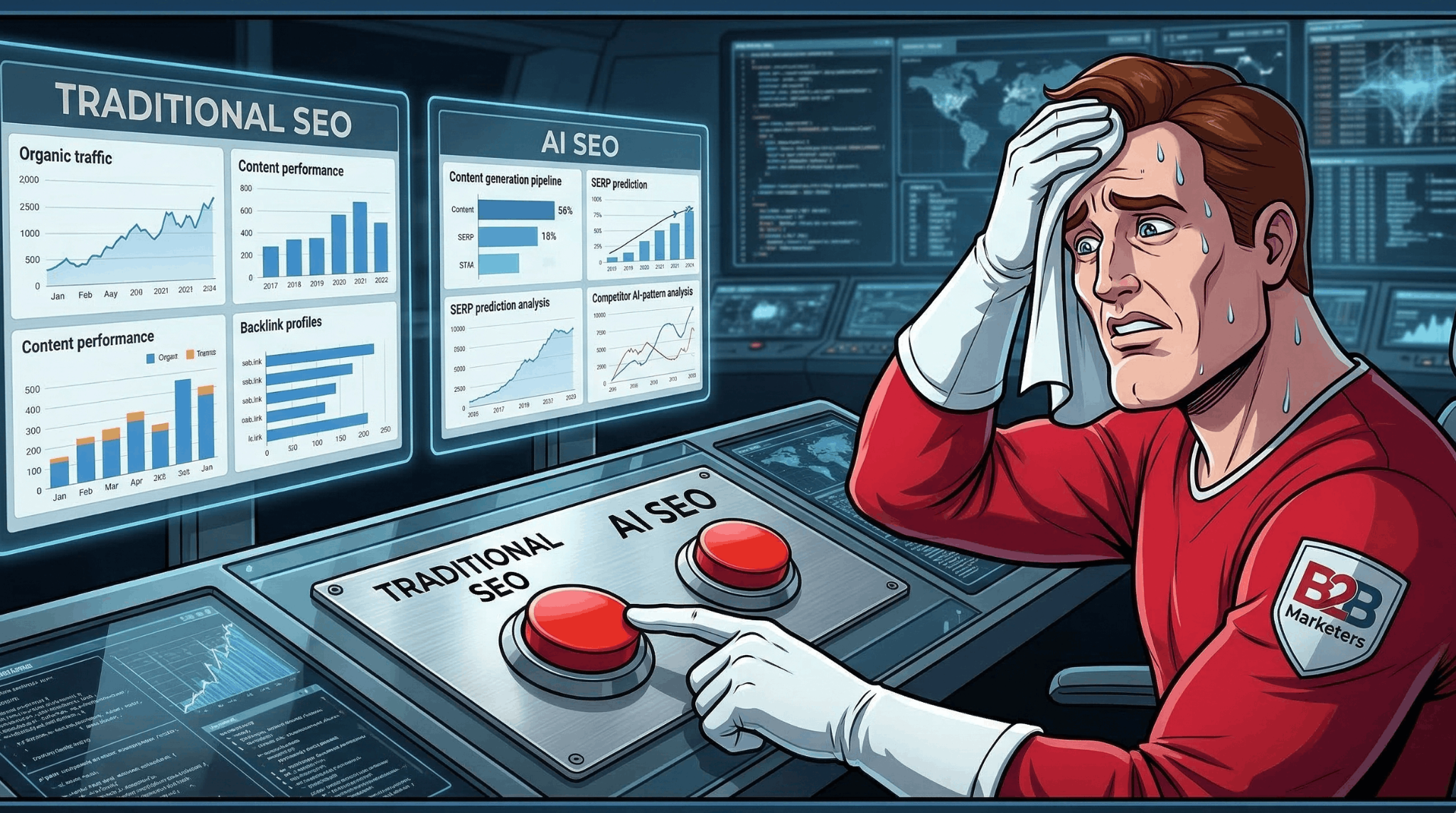
B2B marketers are starting to understand the vast power of generative search. Once upon a time, we looked at SEO as some thing that was optional. But now, not only is it mandatory, it's foundational. Read on to find out more.
<h1>Why B2B Marketers Should be Sweating<br></h1><p>The hardest conversation a B2B marketer will have this quarter won’t be about budget constraints or algorithm updates. It will be the moment a CEO asks exactly how much pipeline their AI SEO strategy actually generated.</p><p>Generative search has become a zero-gravity environment for attribution. Buyers are already using ChatGPT, Perplexity, and Gemini to vet vendors before ever speaking to sales, but when it comes time to map those conversational queries back to closed-won revenue, the data goes dark.</p><p>This opacity is dangerous. You can no longer rely on vanity metrics like “chat impressions.” If you cannot definitively prove that your AI engine citations are driving qualified pipeline leads, your budget will eventually be reallocated to channels that can.</p><p>Here is the exact framework to pull generative search out of the attribution black box.</p><p><br></p><h1><strong>The Urgency of the “Dark AI” Funnel</strong></h1><img src="https://access.discoveraio.com/storage/v1/object/public/public-assets/email-images/The_Dark_AI_Funnel.png" alt="" class="editor-image max-w-full h-auto rounded-lg cursor-pointer transition-all hover:opacity-80" draggable="false" style="max-width: 100%; height: auto;"><p>The transition away from traditional search isn’t just a visibility problem — it’s a tracking problem. <a target="_blank" rel="noopener noreferrer nofollow" class="text-primary underline" href="https://www.gartner.com/en/newsroom/press-releases/2024-02-19-gartner-predicts-search-engine-volume-will-drop-25-percent-by-2026-due-to-ai-chatbots-and-other-virtual-agents"><u>Gartner projects search engine volume will drop 25% by 2026</u></a> due to AI chatbots. That traffic isn’t disappearing. It’s moving into conversational interfaces where traditional tracking pixels don’t fire.</p><p>The attribution gap was already real before AI entered the picture — <a target="_blank" rel="noopener noreferrer nofollow" class="text-primary underline" href="https://contentmarketinginstitute.com/articles/b2b-content-marketing-trends-research/"><u>a third of B2B marketers</u></a> already struggle to measure whether their efforts are working at all. Generative search doesn’t create that problem. It accelerates it.</p><p><br></p><h2><strong>Step 1: Secure Your “AI-Eligible” Baseline</strong></h2><p>Before you can track revenue from a citation, you have to earn one. That starts with understanding how generative engines actually decide what to surface.</p><p>Unlike traditional search, AI systems don’t reward backlink volume — they reward clarity. <a target="_blank" rel="noopener noreferrer nofollow" class="text-primary underline" href="https://www.yext.com/blog/2025/12/why-ai-trusts-structure-not-backlinks"><u>Yext’s analysis of 6.8 million AI citations</u></a> found that structure and consistency outweigh links in determining what gets cited. <a target="_blank" rel="noopener noreferrer nofollow" class="text-primary underline" href="https://thedigitalbloom.com/learn/2025-ai-citation-llm-visibility-report/"><u>Princeton’s GEO research</u></a> confirmed it: brand search volume and topical authority — meaning how comprehensively and consistently you cover a subject — are stronger predictors of citation than any backlink profile.</p><p>In plain terms: AI needs to be able to read you, recognize you, and trust you before it will recommend you. If your brand’s identity, expertise, and context aren’t clearly established on your site, you’re invisible to the engine before the attribution question even matters. <a target="_blank" rel="noopener noreferrer nofollow" class="text-primary underline" href="https://discoveraio.com/guides/the-complete-guide-to-ai-eligible-citation"><u>The Complete Guide to AI Eligible Citation</u></a> walks through exactly how to build that foundation.</p><p><br></p><h2><strong>Step 2: Implement the Referral Triangulation Framework</strong></h2><p>When a prospect clicks a citation link inside an AI engine, that visit rarely announces itself. <a target="_blank" rel="noopener noreferrer nofollow" class="text-primary underline" href="https://nadiamohamed.me/insights/track-ai-referral-traffic/"><u>GA4 has no native AI channel</u></a> — traffic from ChatGPT, Perplexity, Claude, and Gemini gets distributed across Referral, Direct, and Unassigned by default. ChatGPT only began tagging desktop citation links in June 2025. Everything before that, and all mobile traffic, still arrives without attribution.</p><p>To pull this pipeline out of the dark, you need two intentional capture points:</p><ol><li><p><strong>Isolate the known referrers. </strong>In your analytics platform, create a custom channel group using a regex filter to catch traffic from known AI domains — <a target="_blank" rel="noopener noreferrer nofollow" class="text-primary underline" href="http://chatgpt.com">chatgpt.com</a>, <a target="_blank" rel="noopener noreferrer nofollow" class="text-primary underline" href="http://perplexity.ai">perplexity.ai</a>, <a target="_blank" rel="noopener noreferrer nofollow" class="text-primary underline" href="http://claude.ai">claude.ai</a>, <a target="_blank" rel="noopener noreferrer nofollow" class="text-primary underline" href="http://gemini.google.com">gemini.google.com</a>. This takes about 15 minutes to set up and immediately surfaces what’s been hiding in your Direct bucket.</p></li><li><p><strong>Add a hidden field to your high-intent forms. </strong>Update your demo requests and pricing inquiry forms to capture the referring URL at the moment of submission. If a CMO asked Perplexity for “best enterprise SEO agencies,” clicked your citation, and immediately booked a call, that referring URL needs to travel with the lead record into your CRM — not just for attribution, but so your sales team knows exactly how to frame the discovery call.</p></li></ol><p><br></p><h2><strong>Step 3: Remove Technical Crawl Friction</strong></h2><p>The most sophisticated attribution model in the world is useless if an AI crawler hits a wall on your site. AI engines are efficient by design — if your content isn’t accessible, they’ll simply cite your competitor instead.</p><p>Three checks to run before anything else:</p><ol><li><p><strong>Audit your robots.txt — carefully. </strong>This is the file that tells web crawlers which parts of your site they can access. The risk here is subtler than most people realize: <a target="_blank" rel="noopener noreferrer nofollow" class="text-primary underline" href="https://www.searchenginejournal.com/anthropics-claude-bots-make-robots-txt-decisions-more-granular/568253/"><u>AI companies now run separate crawlers for training and for search citations</u></a>. Blocking ClaudeBot or GPTBot stops your content from being used to train AI models — but it doesn’t block the citation crawlers that determine whether you appear in AI answers. Many sites have accidentally made themselves invisible to AI search by applying broad blocks without understanding the difference.</p></li><li><p><strong>Deploy Organization Schema. </strong>Schema is structured code — think of it as a label on the outside of your content that tells AI systems exactly who you are, what you do, and why you’re relevant. Without it, AI engines have to guess your positioning. With it, they don’t.</p></li><li><p><strong>Keep your pages fast and crawlable. </strong>AI crawlers, like traditional search bots, allocate limited resources to each site. Slow-loading or technically broken pages get abandoned mid-crawl — which means your content never gets considered for citation in the first place.</p></li></ol><p>These three checks are the floor, not the ceiling. If you want a full picture of where your site stands — covering 72 specific technical and content factors that affect AI citation eligibility — the <a target="_blank" rel="noopener noreferrer nofollow" class="text-primary underline" href="https://discoveraio.com/resources/72-point-ai-seo-readiness-audit"><u>DiscoverAIO AI SEO Readiness Audit</u></a> is built exactly for that.</p><p><br></p><h2><strong>If You're a B2B Marketer, Listen Closely</strong></h2><p>Tracking AI search revenue isn’t a future-state luxury, it’s a present-day requirement. The buyers are already in the conversation. The citations are already happening. The only question is whether your pipeline reflects it.</p><p>Build your technical foundation. Isolate your referrers. Connect every AI-generated click to closed-won revenue. That’s the whole game.</p><p>There’s a version of AI SEO that chases citation counts and impression volume because they feel like progress. And there’s a version that filters those vanity signals out and asks the only question that matters: did this close a deal? The framework above is built for the second version.</p><p>If you want to go deeper, <a target="_blank" rel="noopener noreferrer nofollow" class="text-primary underline" href="https://discoveraio.com"><u>DiscoverAIO</u></a> is where that work happens. Qualifying members can publish their own articles on the platform, putting their expertise in front of an AI-indexed, authority-building audience and establishing the kind of topical credibility that makes brands citation-eligible in the first place. Membership also unlocks the Member Directory: a private network of marketers, strategists, and operators who are working through the same problems. the kind of peer access that turns frameworks into execution.</p><p>The table is bigger than most people think. You just need a seat at it.</p><p><br></p>