Local SEO Isn't Dead, Your Strategy is Outdated
By Garry M. Callis Jr.
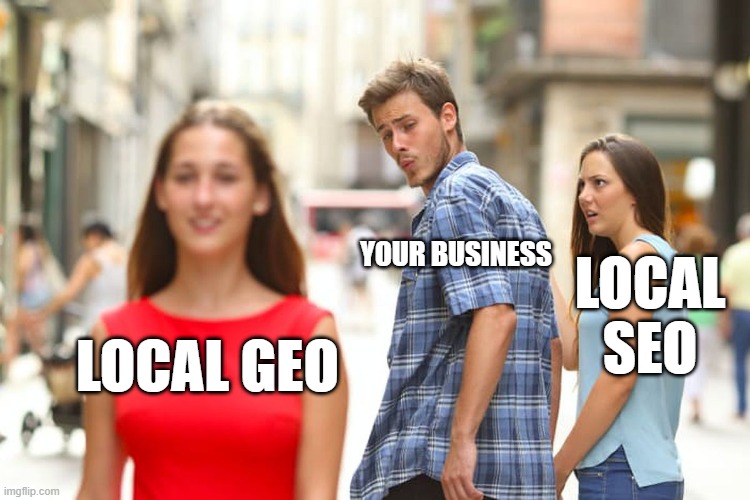
A lot of companies are still using a playbook from 2022 or earlier. Realizing that, we've written a guide that talks about how to think about local SEO practices in 2026.
<h1>Local SEO Is Not Dead. Your Strategy is Outdated</h1><p><br></p><p>Picture this. Your Google Business Profile is verified. Your NAP is consistent. You have 87 reviews with a 4.8 average, and you post every week. By every traditional Local SEO checklist, you are doing everything right.</p><p>So how did a competitor with 31 reviews and a three-year-old website just earn the citation in Google’s AI Overview for your highest-value service category, and not you? </p><p>Because the checklist you are following was written for 2022. The AI does not care about your review count once it clears a basic credibility threshold. It cares whether your business qualifies as a trustworthy local entity, and that qualification is determined by signals most local businesses have never been told about. The game has changed, and no one has told you the rules. That changes now. </p><p></p><h2>What Happened to the Local 3-Pack?</h2><img src="https://access.discoveraio.com/storage/v1/object/public/public-assets/email-images/Gemini_Generated_Image_ekymrxekymrxekym__1_.png" alt="" class="editor-image max-w-full h-auto rounded-lg cursor-pointer transition-all hover:opacity-80" draggable="false" style="max-width: 100%; height: auto;"><p><br></p><p>Google’s Local 3-Pack was the defining real estate of local search for over a decade. Three slots, proximity-weighted, review-reinforced. Win that pack and you win the neighborhood. Here's the thing, the game is changing right in front of us. </p><p><a target="_blank" rel="noopener noreferrer nofollow" class="text-primary underline" href="https://seoprofy.com/blog/local-seo-statistics/"><u>Google AI Overviews now appear on approximately 40%</u></a> of local business queries replacing or compressing the traditional pack in the process. When an AI Overview is present, it frequently shows only one or two organic business results, and the selection criteria are not the same as the criteria that put you in the 3-Pack. The AI is making a different judgment: not “who is nearby and highly-rated?” but “who is a verified, structured, authoritative local entity that I can confidently recommend?”</p><p>That is a different question. And most local businesses are not set up to answer it. AI is geared towards giving answers based on citation authority. Do you or your business have enough substantive evidence or content for AI to recommend you confidently? If so, great. If not, you've got some work to do. </p><h2><br><br>The “Entity Confidence” Problem</h2><img src="https://access.discoveraio.com/storage/v1/object/public/public-assets/email-images/image_2026-04-06_090205005.png" alt="" class="editor-image max-w-full h-auto rounded-lg cursor-pointer transition-all hover:opacity-80" draggable="false" style="max-width: 100%; height: auto;"><p><br>When a user asks ChatGPT or Perplexity “best HVAC company in Raleigh,” those platforms do not pull a local pack. They synthesize an answer from sources they judge authoritative on HVAC services in that geography. They look for:</p><p><br></p><ul><li><p>Business information that is consistent across every directory and platform</p></li><li><p>Structured data on the business’s own website that explicitly identifies it as a local service provider</p></li><li><p>Third-party mentions-not just reviews, but editorial citations from local publications, industry sites, and community sources</p></li><li><p>Active, updated content that signals the business is operating and relevant today</p></li></ul><p>If any of those signals conflict or go missing, the AI’s confidence in recommending your business plummets. This is not a ranking penalty in the traditional sense. Your business, as a result in the AI's confidence drop, is being screened out before the conversation even starts. </p><p><a target="_blank" rel="noopener noreferrer nofollow" class="text-primary underline" href="https://www.dataslayer.ai/blog/google-ai-overviews-the-end-of-traditional-ctr-and-how-to-adapt-in-2025"><u>Brands cited in AI responses earn roughly 35% higher organic CTR</u></a> than non-cited competitors on the same query. The businesses making it into that citation layer are not necessarily the ones with the best reviews, they are the ones the AI can verify with confidence. Put simply, users that see brands that are trusted by AI are more likely to go from the beginning to the end of the buyers journey and convert into a customer. </p><p><br></p><h2>What “Local GEO” Actually Means</h2><p>Traditional Local SEO and Local GEO tactics on its face are the same. However, when you think about how AI can augment these traditional, or foundational SEO practices, it completely flips the script on how local businesses can be cited by AI search. </p><h3>The distinction matters because the tactics are different:</h3><p></p><table style="min-width: 50px;"><colgroup><col style="min-width: 25px;"><col style="min-width: 25px;"></colgroup><tbody><tr><td colspan="1" rowspan="1"><p>Traditional Local SEO</p><p></p></td><td colspan="1" rowspan="1"><p>Local GEO</p></td></tr><tr><td colspan="1" rowspan="1"><p>Optimize GBP for keyword-forward categories</p></td><td colspan="1" rowspan="1"><p>Make GBP the AI’s authoritative data source</p></td></tr><tr><td colspan="1" rowspan="1"><p>Build citation volume across directories</p></td><td colspan="1" rowspan="1"><p>Maintain citation consistency as a trust signal</p></td></tr><tr><td colspan="1" rowspan="1"><p>Earn reviews for ranking weight</p></td><td colspan="1" rowspan="1"><p>Manage reviews because AI reads sentiment</p></td></tr><tr><td colspan="1" rowspan="1"><p>Target the Local 3-Pack</p></td><td colspan="1" rowspan="1"><p>Target the AI Overview citation slot</p></td></tr><tr><td colspan="1" rowspan="1"><p>Rank for “near me” queries</p></td><td colspan="1" rowspan="1"><p>Structure content to answer “who should I call” queries</p></td></tr></tbody></table><p><br></p><p>Your Google Business Profile is not obsolete, it is still the primary data anchor the AI pulls from for local queries. However, it does not operate alone anymore. AI checks it against everything else it can find about your business on the web. We’ll get into this a bit later, but third party mentions, uniqueness, anything that sets you apart from your competitors, is the secret sauce that will help you win the race of AI search. </p><p><br></p><h2>Three Free Fixes You Can Do This Week</h2><p>Before anything else, address these three gaps. They are the most common reasons local businesses get screened out of AI-generated answers:</p><p><br>1.<strong> Audit Your NAP Consistency:</strong></p><p>Name, Address, Phone. Pull your listings on Google, Apple Maps, Bing Places, Yelp, and at least two industry-specific directories. If any entry shows a different phone number, a suite number that appears in some places but not others, or a business name variation-fix it. Inconsistent NAP data actively erodes the AI’s confidence in your entity. This is not a ranking tweak; it is a qualification requirement.</p><p><br></p><p><strong> 2. Add LocalBusiness Schema to Your Website</strong></p><p>Your website likely does not tell the AI what type of business you are, where you operate, or what services you provide-in a format the AI can parse without guessing. LocalBusiness schema markup fixes that. Add it to your homepage or key service pages and include your service area, business hours, and primary service category. Free to implement, and it immediately improves your structured data signal for both Google AI Overviews and conversational AI platforms.</p><p><br></p><p> 3. <strong>Make Your GBP Dynamic, Not Static</strong></p><p>AI weighs fresh data against data that’s been around for a bit. A GBP last updated six months ago signals a business that may or may not still be operating. Post an update every two weeks at minimum. Add photos from recent jobs. Answer the Q&A section on your profile with direct, specific responses-those Q&As are frequently extracted verbatim by AI systems synthesizing local recommendations. Content freshness in any capacity is a good thing. <a target="_blank" rel="noopener noreferrer nofollow" class="text-primary underline" href="https://xponent21.com/insights/the-good-farmer-seo-method/"><u>Good Farmer SEO</u></a>, one of our signature methods, is all about maintaining content over time, like a farmer tending to their crops. Think of your company’s marketing strategy the same way. </p><p></p><h2>Signals That Actually Win Citations</h2><p></p><p>Use these three tactics, and you have a better chance of actually being seen in AI search. At the end of the day, the goal is AI citation authority in your respective space or vertical. </p><p></p><ol><li><p><strong>Third-Party Corroboration</strong></p></li></ol><p>Your website and GBP are owned media. The AI knows that. What raises its confidence is when third-party sources-local news outlets, neighborhood directories, industry association listings, podcast mentions-independently confirm your business’s existence and expertise. One mention in a local chamber of commerce feature carries more AI citation weight than twenty directory submissions. Pursue editorial mentions, not directory padding.</p><p><br></p><ol start="2"><li><p><strong>Sentiment in Reviews, Not Just Volume</strong></p></li></ol><p>AI platforms read your reviews in full. Google’s AI systems actively analyze review sentiment to assess whether a business is truly trustworthy, not just highly-rated. A business with 50 high-quality reviews that are specific, detailed, and name actual service categories will outperform a business with 150 reviews that read “great service, highly recommend.” Respond to reviews. Respond specifically. The AI is reading the thread. Generic, cookie-cutter descriptions, buzzwords, and other "slop" will get you nowhere.</p><p><br></p><ol start="3"><li><p><strong>Answer-Layer Content on Your Own Site</strong></p></li></ol><p>Most local business websites masquerade as sales brochures. The AI wants verified, citable sources. Create service pages that open with a direct answer to the question a buyer actually asks. Generic statements like, “Our HVAC team is dedicated to your comfort,” won’t move the needle. Think of statements such as; “We service Carrier, Trane, and Lennox systems across Wake County, with same-day availability Monday through Saturday.” That specificity is what gets extracted and cited by AI, especially when you have outside sources that corroborate your statements. Invest in reviews, testimonials, anything that shows your company’s external trust through the eyes of another. </p><p><br><br></p><h2>A Practical Example</h2><h3>Meridian Plumbing vs. ClearFlow Services</h3><p></p><p>We have 2 fictional companies here. Meridian Plumbing has operated in Austin, Texas for 14 years. 4.9-star GBP. 140 reviews. Consistent NAP. Steady 3-Pack placement on their core service queries. By every legacy metric, they are the market leader.</p><p>ClearFlow Services launched in Austin, Texas in 2023. 62 reviews. Domain authority that does not compare. But every service page opens with a 50-word direct answer to the most common customer question for that service. They have LocalBusiness and FAQPage schema sitewide. They were featured in two Austin neighborhood blogs and an ABC affiliate “best plumbers in Austin” roundup. Their GBP gets a fresh post every week. Their owner was featured on a locally ran podcast talking about their business and what they have done for their community. They post on Instagram and LinkedIn constantly. </p><p></p><p>When a homeowner asks their preferred LLM “who should I call for a burst pipe in South Austin,” ClearFlow earns the citation. Meridian gets left in the dust. </p><p>14 years. 140 reviews. Invisible to the AI giving out the referral. Their playbook was outdated. Meridian was playing checkers while ClearFlow was playing 4D chess. </p><h2><br>Three Free Tools to Validate Your Work</h2><p></p><p>Once you have made the fixes above, use these to confirm the improvements are registering, before you assume anything is working:</p><p><br></p><ul><li><p><a target="_blank" rel="noopener noreferrer nofollow" class="text-primary underline" href="https://search.google.com/test/rich-results">Google’s Rich Results Test</a>: Paste your URL and verify your LocalBusiness and FAQPage schema is valid and readable. If it throws errors, the AI cannot parse your structured data regardless of how well the page is written.</p></li><li><p><a target="_blank" rel="noopener noreferrer nofollow" class="text-primary underline" href="https://validator.schema.org">Schema Markup Validator</a>: A more thorough schema check that catches issues Google’s own tool sometimes misses. Run your homepage and your top two service pages.</p></li><li><p>Google Business Profile Insights: Inside your GBP dashboard, search queries and discovery data tell you whether your profile is surfacing for the right intent. If you are appearing for branded queries but not category queries, your service categories need restructuring.</p></li></ul><p><br></p><p>These three diagnose the most common local entity failures at no cost. If you are managing multiple locations, running a franchise, or competing in a dense market where gaps compound across dozens of pages and listings, the diagnostic scope grows fast. That is where a structured review, like <a target="_blank" rel="noopener noreferrer nofollow" class="text-primary underline" href="https://discoveraio.com/resources/72-point-ai-seo-readiness-audit"><u>Discover AIO’s 72-Point AI SEO Readiness Audit </u></a>, a paid service, gives you a sequenced picture of exactly where you are losing ground and in what order to fix it.</p><p><br></p><p><a target="_blank" rel="noopener noreferrer nofollow" class="text-primary underline" href="https://seoprofy.com/blog/local-seo-statistics/)">Overviews are present on 40% of local business queries </a>, and that number is climbing. Organic CTR for local informational queries has dropped by 61% when an AI Overview is present. The businesses earning citations in those AI answers are <a target="_blank" rel="noopener noreferrer nofollow" class="text-primary underline" href="https://agencydashboard.io/how-ai-overviews-are-changing-local-seo-strategies/">pulling 35% more clicks</a> than competitors sitting one position below them in the traditional results.</p><p><br></p><p>This is April 2026. Every local business that has not updated its strategy is already losing ground, may not see in its analytics until the damage is done.</p><p>The Local 3-Pack is not gone. But it is no longer the only door. Your job is to be the business the AI trusts enough to name, and that trust is built on data consistency, structured content, and a brand presence the AI can verify from sources it did not control.</p><p>Start with what you can fix this week. Then close the gaps before a competitor with a newer site and a better-structured entity earns the citation that should be yours.</p><div class="w-full aspect-video rounded-lg my-4 youtube-embed" data-youtube-video="" data-src="https://youtu.be/LPSNkC-6kks?si=Y8Mr66a9IzBUcXZp" data-width="640" data-height="360"><iframe src="https://www.youtube-nocookie.com/embed/LPSNkC-6kks" width="100%" height="360" frameborder="0" allowfullscreen="true" allow="accelerometer; autoplay; clipboard-write; encrypted-media; gyroscope; picture-in-picture" class="w-full aspect-video rounded-lg"></iframe></div><p><br>The full framework for building AI-eligible entity authority locally and beyond starts at The <a target="_blank" rel="noopener noreferrer nofollow" class="text-primary underline" href="https://discoveraio.com/guides/the-complete-guide-to-ai-eligible-citation"><u>Complete Guide to AI Eligible Citation</u></a> </p><p>For a vertical-specific look at exactly how this plays out on the ground, <a target="_blank" rel="noopener noreferrer nofollow" class="text-primary underline" href="https://discoveraio.com/articles/the-zero-click-fairway-why-local-golf-facilities-cant-afford-to-ignore-ai-search-in-2026"><u>The Zero-Click Fairway </u></a>shows how golf facilities and local sport venues are winning and losing the AI citation game in 2026.</p><p>If you haven't already, register for our next Member Call, which you can do in your Dashboard. </p><p></p><p>You’ll find more tools, resources, and articles on <a target="_blank" rel="noopener noreferrer nofollow" class="text-primary underline" href="http://discoveraio.com"><u>discoveraio.com</u></a></p><p><br></p>