Search Spent 25 Years Sending Traffic. Google in 2026 Takes Traffic
By Garry M. Callis Jr.
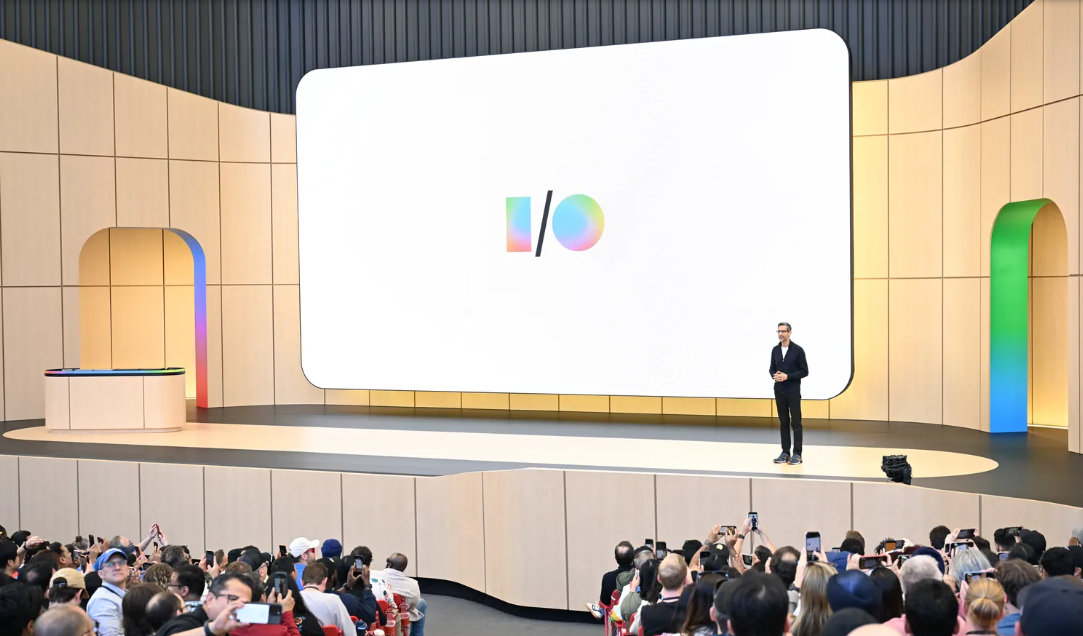
Will called it last year. Google's AI Mode was going to shake up search as we knew it, and at Google's I/O 2026, it strikes again. We talk about that and more below.
<p></p><p>There's a lot of noise right now about what AI can do for your SEO/AEO workflow. Which tools pay for themselves. How much revenue you can generate if you set up the right agent pipeline. However, the conversation goes a lot deeper than that.</p><p>At Google I/O 2026, a number dropped that should be stopping that conversation mid-sentence. AI Mode has surpassed 1 billion monthly users. Let that sink in for a second, One billion. I'm writing this in conjunction with AI, and this number is still hitting me in the chest.</p><p>A billion monthly users is infrastructure at scale. And if you work in SEO or content marketing and you haven't felt the weight of that number yet, this article is the place to start.</p><p></p><h2>The Number That Ends the "Wait and See" Argument</h2><img src="https://access.discoveraio.com/storage/v1/object/public/public-assets/email-images/AdobeStock_246704236.jpeg" alt="" class="editor-image max-w-full h-auto rounded-lg cursor-pointer transition-all hover:opacity-80" draggable="false" style="max-width: 100%; height: auto;"><p><br></p><p>Because we feel this figure is important, we're going to repeat it.</p><p>1 billion monthly users. On a planet of 8.3 billion people. And about 5 billion people are connected to the Internet. Almost 20 percent of the internet-connected human population.</p><p>That figure isn't context for the rest of this article. It <em>is</em> the article. Every strategic recommendation that follows derives its urgency from that single data point.</p><p>Google also reported that AI Mode queries are more than doubling every quarter since launch. Overall search queries reached an all-time high at the same time.</p><p>When Will Melton, the CEO of Xponent21 published his analysis of Google I/O 2025, the number that defined the shift was 60%: <a target="_blank" rel="noopener noreferrer nofollow" class="text-primary underline" href="https://xponent21.com/insights/google-ai-overviews-surpass-60-percent/">60% of searches already ending before a click. </a>His read was that AI citation had become the new standard for business visibility, and that the gap between where search was heading and how most content was structured would only widen. That was the baseline. One year later, it had compounded to a billion monthly users with queries more than doubling every quarter. More searches. More AI Mode usage. And, based on everything the industry knows about zero-click behavior, fewer clicks per query reaching your site.</p><p><br></p><p>That gap is the business problem. A billion people using AI Mode monthly, with queries accelerating, on a product designed to deliver answers in place rather than send people elsewhere. If your content strategy is still primarily optimized for the click, you are optimizing for a behavior that a growing share of those billion people are no longer doing.</p><p>There is a whole lot of noise right now from people in tech talking about all the money they're making with Claude and their workflows. This is what people should be paying attention to. Google confirmed this is already here. The window for treating it as an emerging trend has closed.</p><p></p><h2>From Directory to Infrastructure: What Actually Shifted</h2><p><br></p><p>A directory has one job: point you somewhere else. You go to Google, Google tells you where to go, you leave Google. For 25 years, that was the deal. SEO was built entirely around making your site the place Google pointed to.</p><p>Infrastructure works differently. It extracts value from sources, synthesizes it, and delivers it directly. The user gets the answer. The source may or may not get the visit.</p><p>The trajectory leading to Google I/O 2026 has been running for years. Featured snippets extracted your content and displayed it in place. Knowledge panels answered factual queries without a click. AI Overviews synthesized multiple sources into a single response. Every step followed the same logic: pull from the index, assemble, and deliver, without sending the user elsewhere.</p><p>Again, Will was on top of things from the get-go and he not only identified the structural stakes, he identified how companies and agencies were going to carry out the actions needed to bring this to the fore. Xponent21, our parent company, was able to take these insights and create content for clients that moved the needle in AI powered search. From outranking government pages on pool permits, to combating seasonality for products that typically get nothing in the winter, Xponent21 knew what to do.</p><p>Will gave us the playbook last <a target="_blank" rel="noopener noreferrer nofollow" class="text-primary underline" href="https://xponent21.com/insights/googles-ai-mode-just-changed-everything-heres-what-businesses-need-to-know/">year. </a>Google I/O 2026 confirmed the endpoint of this trajectory with three permanent features deployed at scale. Search is infrastructure now. What's in the index gets extracted. What's extractable gets used. Period. End of Story.</p><p><br></p><h2>Three Announcements. One Architecture. </h2><img src="https://access.discoveraio.com/storage/v1/object/public/public-assets/email-images/Gemini_Generated_Image_1b1w3k1b1w3k1b1w__1_.png" alt="" class="editor-image max-w-full h-auto rounded-lg cursor-pointer transition-all hover:opacity-80" draggable="false" style="max-width: 100%; height: auto;"><p><br></p><p>Cover any of these three features as a standalone product update and you'll miss the point. Think of it like an SEO Voltron. One of these features alone may do something, but it's an absolute force when they come together. These three features create a new search architecture.</p><p><br></p><h3>Generative UI: Your Article Is Now a Data Source</h3><p><br></p><p>Search can now build custom interactive interfaces on the fly: tables, graphs, simulations, and persistent mini-apps for ongoing tasks like planning a wedding or tracking a home renovation. Search doesn't pull these from a template. It assembles them in real time from content in the index, matching them to the specific query. This feature is free. It rolls out this summer. For everyone. Not just companies with enterprise budgets, everyone. For a piece of content you've worked to rank, the article doesn't disappear. It gets used. It becomes a source Search draws from to build something else. The information moves. The click may not.</p><p>Consider this scenario, a content manager at a mid-size B2B SaaS company who checks her analytics in September 2026, a month after Generative UI goes live. Her top-performing "complete guide" dropped 28% in traffic. Rankings are unchanged. She searches the primary keyword herself and finds Google has built a custom comparison table, sourced from her article, attributed to her domain, delivered inline. The content is working. The click is gone. </p><p>That scenario is already in motion. Your article is either a data source for this infrastructure or it isn't.</p><p><br></p><h3>Information Agents: Distribution Without a Search</h3><p><br></p><p>Google announced that users can create AI agents that monitor the web continuously, synthesize updates on any topic, and deliver structured briefings without a search being triggered. For content teams, this is a new distribution channel. Your content either gets synthesized into a user's daily briefings or it doesn't appear in that user's awareness. The mechanism isn't ranking. It's topic authority and structural clarity.</p><p>Another scenario, an SEO director prepares for a client quarterly review. She types the primary query her client has ranked first for over two years into AI Mode. Google's Information Agent delivers a synthesized briefing: three sources, two expert quotes, a clear recommendation. Her client is not one of the three. They haven't been penalized. They've been structurally overlooked. Penalty problems and structural oversight problems have different fixes. Most SEO teams are only equipped to diagnose the first one. </p><p><br></p><h3>Unified AI Search: The SERP is no longer the North Star</h3><p><br></p><p>AI Overviews and AI Mode are now a single, seamless experience. Query, AI Overview, AI Mode follow-up: all in one flow. The "skip to the blue links" path has been architected out of the product. Much of the "AI search is overstated" argument rested on one observation: people scroll past AI Overviews and click anyway. Google redesigned the surface. The unified experience presents AI as the result, with no gap to scroll past. Together, Generative UI, Information Agents, and unified AI Search form a single architectural statement. They are three implementations of the same logic: extract, synthesize, deliver. Search infrastructure operates at scale now. The only question worth asking is whether your content is what it pulls from.</p><p></p><h2>The AI Mode Question that Replaces "How Do I Rank?" </h2><img src="https://access.discoveraio.com/storage/v1/object/public/public-assets/email-images/AdobeStock_496887170.jpeg" alt="" class="editor-image max-w-full h-auto rounded-lg cursor-pointer transition-all hover:opacity-80" draggable="false" style="max-width: 100%; height: auto;"><p><br></p><p>For most of SEO's history, ranking was a reasonable proxy for visibility. First page meant traffic. First position meant more of it. That proxy is breaking. A site can hold its rankings while losing traffic because the AI layer above the results synthesized what the user needed. Ranking tells you where you appear in the index. Pool membership determines whether or not you appear in what gets delivered. The strategic question that your team should ask right now, are you in the pool of sources this infrastructure trusts and pulls from? If the answer is no, you aren't alone.</p><p><br></p><p>Pool membership runs on different signals than ranking position. Topical authority (deep, specific, structured coverage of a subject) outweighs individual keyword optimization. Cited claims, concrete examples, and original analysis are the signals that get content extracted and attributed. Vague, generic content may rank. It won't get pulled. The gap between ranking and pool membership is where most content strategies are currently losing ground without seeing it in their dashboards.</p><p><br></p><h2>What Your AI Search Strategy Looks Like Monday Morning</h2><img src="https://access.discoveraio.com/storage/v1/object/public/public-assets/email-images/AdobeStock_1794406533.jpeg" alt="" class="editor-image max-w-full h-auto rounded-lg cursor-pointer transition-all hover:opacity-80" draggable="false" style="max-width: 100%; height: auto;"><p><br>This section covers specific audits and a clear sense of what to change. These shifts in search can be a bit scary, but we've got a few tips to help your team succeed.</p><p></p><ul><li><p>Audit for extractability. Pull your top 20 articles. Read each H2 section in isolation. If a section only makes sense when read after the preceding one, a generative system won't extract it cleanly. Rewrite those sections to stand alone. Every major section of your content should function as an independent, attributable passage.</p></li></ul><ul><li><p>Shift from position thinking to pool thinking. For each topic your content covers, ask: if a system were monitoring this subject 24/7 and assembling a briefing, would my content appear in it? Deep, specific coverage of a topic over time builds pool inclusion. Shallow coverage optimized for a single keyword won't earn that placement.</p></li><li><p>Structure for synthesis. Data tables, numbered steps, and short declarative statements with evidence: these get extracted. Long prose paragraphs, even excellent ones, are harder for a generative system to pull cleanly and attribute. The format of your content is now a ranking signal in a different system.</p></li><li><p>Track source authority alongside traffic. If Generative UI is drawing from your content, traffic may dip while your content continues working. Set up brand monitoring for AI-generated responses. Track when and how your domain gets cited in AI Mode outputs. That data reflects your actual position in the infrastructure in ways that session counts no longer do.</p></li></ul><p>The content teams that fare best in this environment built for extractability before it was required. That <br>drawbridge is still lowered, but it is coming up slowly. Do what you must to not be left behind. <br></p><p></p><h2>One Question This Shift Raises</h2><img src="https://access.discoveraio.com/storage/v1/object/public/public-assets/email-images/image_2026-05-26_175910518.png" alt="" class="editor-image max-w-full h-auto rounded-lg cursor-pointer transition-all hover:opacity-80" draggable="false" style="max-width: 100%; height: auto;"><p><br></p><p>If search infrastructure is pulling from your content and synthesizing it, who is on the other end of that pull?</p><p>For a growing share of queries, the answer is not a human browsing directly. At Google I/O 2026, Google announced Gemini Spark: a 24/7 personal agent that researches options, takes action on a user's behalf, and surfaces recommendations. The human enters later in the process, if at all.</p><p>One of the biggest things that Will predicted last year was that AI agents would soon handle appointments, purchases, and transactions directly, and that content would need to be structured for machine readability to stay part of those interactions. Here we are a year later and now Gemini Spark is that prediction, in production, as a Google product.</p><p>That changes who your content is written for, and whether the entity doing the first-pass evaluation can find what it needs in what you've published. When the agent is the buyer, the content requirements shift.</p><p></p><p>This article has a lot to process, and we know it can be a bit daunting to do all at once. Here at Discover AIO, we have a community of marketers who are willing to chat, network, and help you reach your goal of becoming a better marketer in the Age of AI. We have a Member Directory, community calls, opportunities for members to write their own articles, and even our own AI SEO Leadership Blueprint course, led by the one and only, Will Melton. <br><br>We even have our very first webinar happening on June 4th, 2026 at 10am EST. We'll be going over the platform, tools we're developing, and we have a Q&A section, so register <a target="_blank" rel="noopener noreferrer nofollow" class="text-primary underline" href="https://discoveraio.com/webinar/june-4-2026#register">here, </a>and get your questions answered live.</p><p><br></p><p></p><p><br></p>